

eGovernance Consultancy
The initiative at the NIC Centre of Excellence on Microservices (NIC-CEM), Kochi is a strategic effort to strengthen technical capacity, foster innovation, and enable effective knowledge sharing across the National Informatics Centre (NIC) PAN-India fraternity.
Centre of Excellence of Microservices (NIC-CEM) has been setup with a vision to facilitate NIC fraternity in adopting agile and DevOps methodology with Microservices for delivering e-Governance services. CEM is acting as the resource centre of consultancy, support for microservices based projects and extends assistance in identifying and moving feasible monolithic applications to microservices based applications
NIC-CEM offers consultancy in the following area:
Migration of Monolithic Applications to Microservices Architecture.
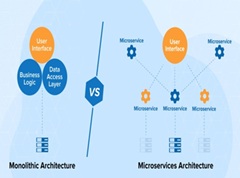 NIC supports a wide range of mission-critical e-Governance applications, many of which are implemented using monolithic architecture. In these systems, business logic, data access, and presentation layers are tightly coupled and deployed as a single unit. While this approach simplified early development, it introduces significant limitations as applications scale and evolve. CEM provides a comprehensive and systematic approach to modernising such applications. The process begins with a detailed assessment and analysis of the existing application to understand its architecture, dependencies, scalability issues, and technical constraints.
* Identifies and defines candidate microservices aligned with business functions.
* Recommends appropriate refactoring and decomposition strategies, such as the Strangler Pattern, to ensure minimal disruption.
* Designs a phased and risk-controlled migration roadmap from monolith to microservices.
* Ensures compatibility with modern platforms, cloud readiness, and DevOps practices.
Frameworks / Languages / Tools/Resources
Microservices Architecture (MSA)–based application development is enabled by a well-defined ecosystem of frameworks, programming languages, platforms, and supporting tools. These technologies collectively help achieve the core characteristics of MSA, such as loose coupling, independent deployment, scalability, fault isolation, and resilience.
NIC CEM has evaluated, adopted, and validated a wide range of open-source and industry-standard MSA technologies through multiple Proofs of Concept (PoCs) and pilot implementations. Based on these practical experiences, NIC CEM has published Standard Operating Procedures (SoPs) and technical guidelines to ensure consistency, security, and best practices across implementations.
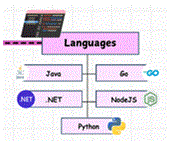 Frameworks / Languages suitable for each service.
 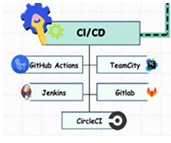 Code Repository and CI/CD pipelines for deployments.
 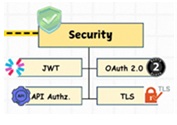 Authentication and authorisation process.
 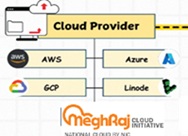 Authentication and authorisation process.
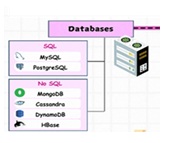 Service-aligned Data Stores.
 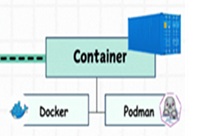 Proper utilisation of resources by virtualisation.
 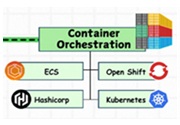 Supporting DevOps and Automatic Scaling.
 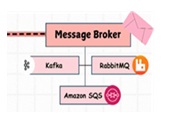 Messaging tools for Asynchronous Communication among services.
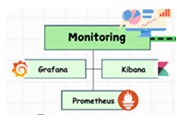
Through curated frameworks, validated tools, and standardized SoPs, NIC CEM enables the secure and consistent adoption of Microservices Architecture across e-Governance applications in alignment with Digital India and MeitY guidelines. The Centre promotes cloud-native, interoperable, and scalable application design while ensuring compliance, security- by-design, and operational excellence. By supporting modernization of legacy systems and accelerating agile delivery, NIC CEM strengthens the development of resilient, citizen-centric digital public services.
Walk through DevOps Lab
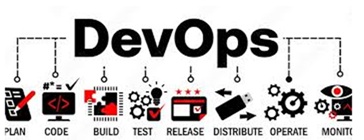
CEM offers NIC development teams across India the opportunity to utilise a DevOps walkthrough lab established using resources allocated at IDC Thiruvananthapuram, Kerala. This lab has been designed, tested, and calibrated through multiple Proofs of Concept (PoCs) executed by the NIC CEM team to ensure its robustness and practical applicability. NIC teams developing Microservices Architecture (MSA)–based applications can use this facility to gain hands-on experience with an end-to-end DevOps lifecycle. The lab enables teams to work with a source code repository integrated with CI/CD pipelines, allowing applications to be automatically built, tested, and deployed onto a Kubernetes platform managed by Rancher.
The CI/CD pipeline, implemented using Jenkins, is configured to support:
* Static code analysis and testing using SonarQube.
* Container image creation using Docker.
* Pushing images to a private container registry.
* Deployment of workloads on a K3s-based Kubernetes platform.
In addition, the DevOps setup includes components for load management and API gateway configuration as part of the deployment lifecycle. Messaging requirements can be evaluated using RabbitMQ and Kafka, while multiple options for data management are available. The lab also supports authentication and authorisation testing using Keycloak.
NIC development teams may access and exercise this lab to validate their application development and deployment workflows, subject to prior request and necessary approvals.
NIC-CEM offers consultancy in the following area :
• Microservices :
o Migration of Monolithic Applications to Microservices Architecture
o Frameworks / Languages / Tools
o Databases
o Communication
• Containerisation
• Others :
o Architecture for e-Governance Applications
o Frameworks / Languages / Tools
o Databases
o Communication
o Deployment


